
Introduction: Why many websites don't work
Many websites appear modern and appealing at first glance – but upon closer inspection, the impact is often lacking. Visitors land on the site, browse briefly, and then leave without seeking further information or contacting the company. This is particularly frustrating for entrepreneurs in Potsdam, Berlin, and Brandenburg, as a website is now the heart of customer acquisition. An investment in good web design that ultimately fails to generate new inquiries or sales is wasted potential.
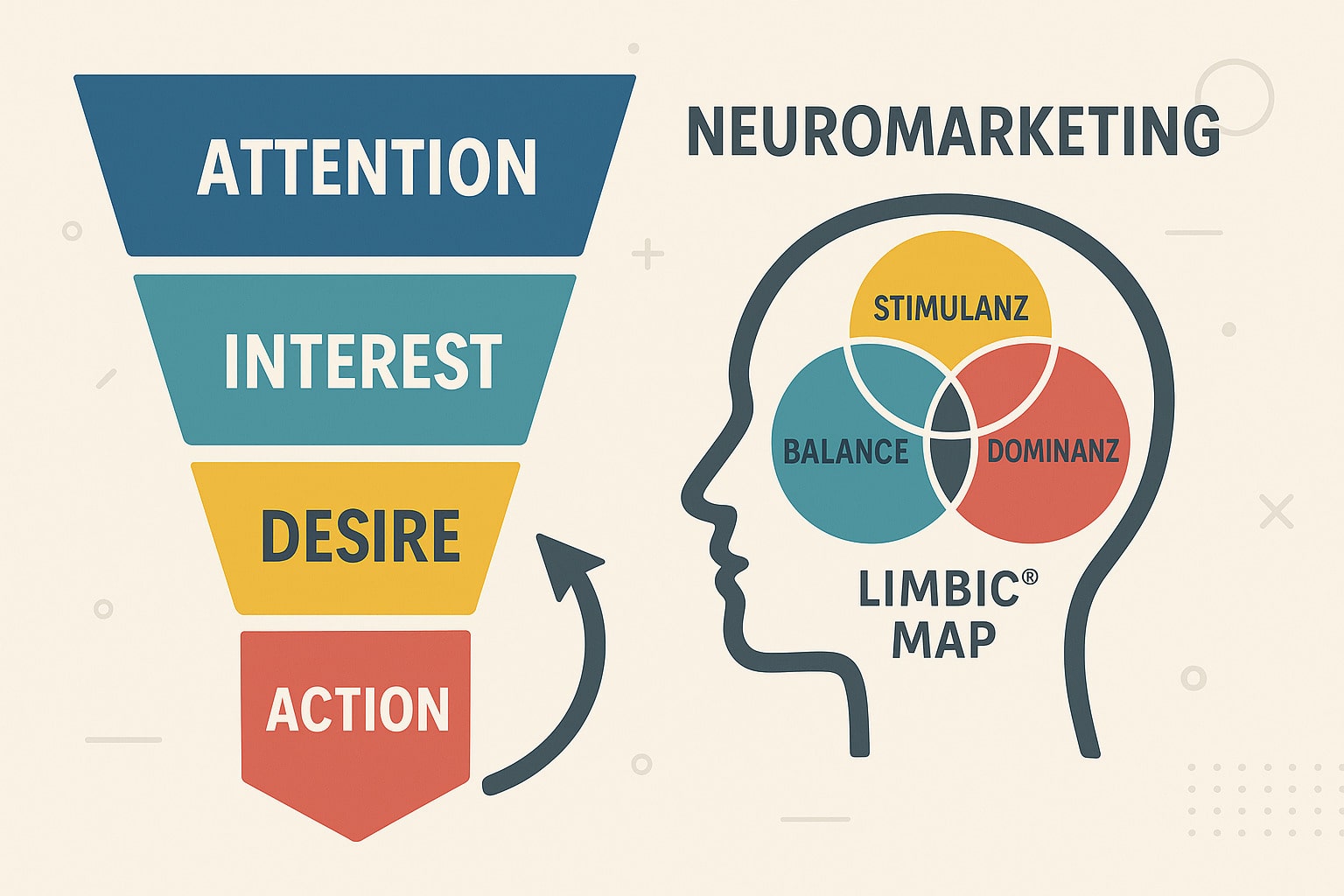
Often the problem is that websites without a clear thread are poorly structured, contain too many technical terms, or address visitors on a purely factual level. Many people forget that people make decisions emotionally, not purely rationally. This is precisely where AIDA-Formula and the Neuromarketing with the Limbic® Map They combine structure with emotions and turn a website into a selling tool.
1. The AIDA formula: The common thread in web design
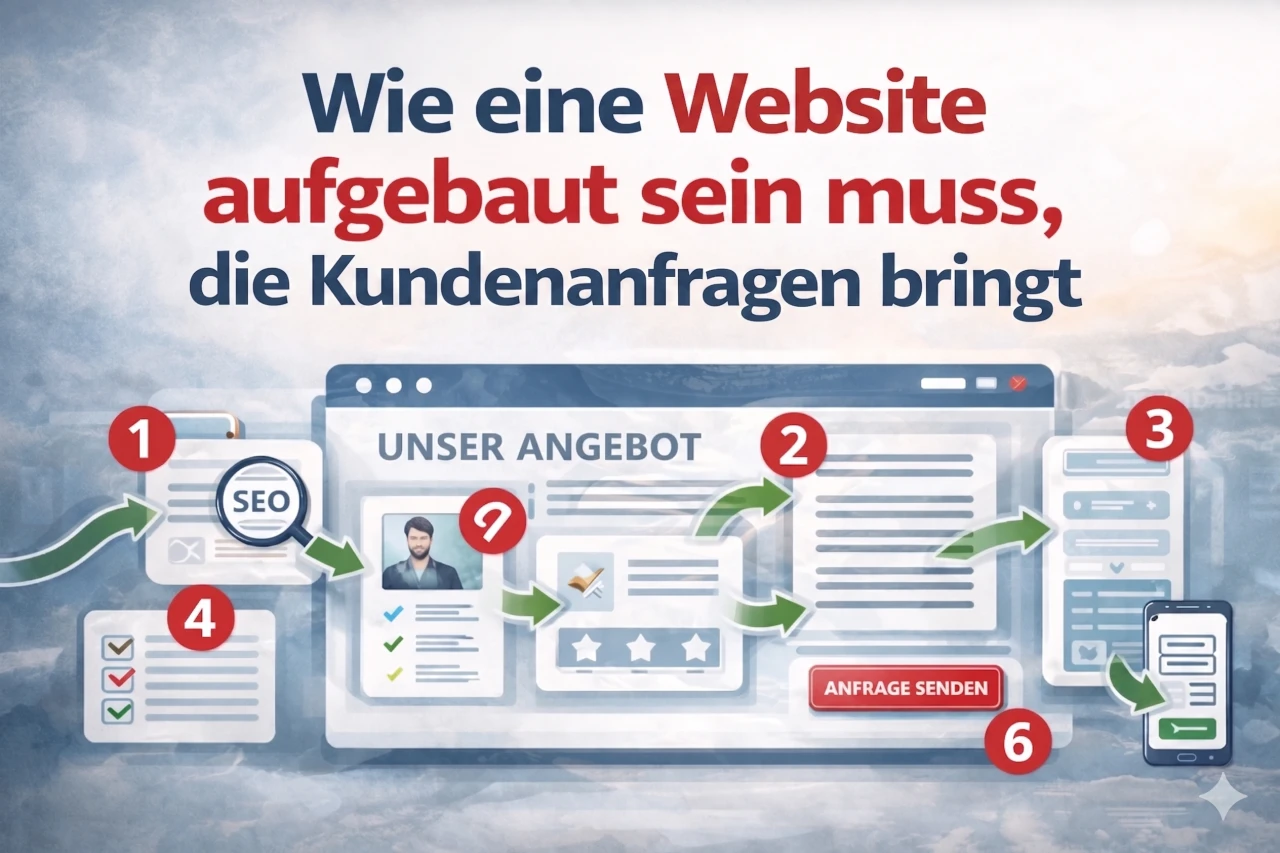
The AIDA formula is a marketing classic and describes the four key steps every customer unconsciously goes through before making a decision. It's particularly useful in web design because it provides orientation and ensures that visitors are guided step by step—from initial attention to action.
Many companies in Brandenburg and Potsdam have modern websites, but they "forget" one or more of these steps. The result: The site looks good, but doesn't lead to increased sales. The AIDA formula makes the process clear and structured.
1. Attention – Gain attention
Before a visitor even perceives any content, they decide in seconds whether to stay or leave the site. A website needs to be immediately compelling, especially on smartphones. During this phase, it's crucial to generate attention with clear messages, visual stimuli, and professional design.
How to generate attention:
- Clear headline with customer benefits (“Make your practice visible online”)
- A strong image that conveys trust (e.g., a real photo of your team instead of an anonymous stock photo)
- Color contrasts that provide orientation
👉 Studies show: 50% of consumers judge the credibility of a company based on its web design.
2. Interest – arouse interest
Once attention has been gained, the next question immediately arises: Am I in the right place? Visitors want to know within seconds whether you can meet their needs. In this phase, it's all about providing guidance through clear structure and understandable text. The simpler the information is, the longer visitors stay on the site.
How to create interest:
- A clearly structured menu without distractions
- Short texts with understandable benefit promises
- A clear structure: "Who we are - What we do - Why you benefit"
👉 94 % of online users mention easy navigation as the most important feature of a website.
3. desire - trigger desire
Attention and interest alone are not enough - now the desire must arise to actually get in touch with you or buy your product. Emotions play a central role in this phase. Evidence, trust and clear benefits that make the visitor say inwardly are required here: I want that too!
This is how desire arises:
- Customer testimonials and case studies (social proof)
- Before and after examples
- Exclusive offers or specialisations
- Visualisation of the ROI ("With our new website 30 % more enquiries in 6 months")
4. action - facilitate action
In the end, it's the action that counts. Without a clear call to action, even the best presentation will fall flat. The action must be as simple as possible - whether booking an appointment, enquiry or purchase. Every hurdle costs conversion.
This is how you encourage action:
- Multiple buttons ("Make an appointment now")
- Use contrasts: Red buttons increase the conversion rate by up to 34 %
- Mobile optimisation: 66 % of online traffic comes from smartphones
2. neuromarketing: why emotions are more important than facts
Conventional marketing often relies on facts and technical data. But modern brain research shows that People make decisions predominantly emotionally. Neuromarketing builds on these findings and helps to design websites in such a way that they directly address the subconscious needs and motives of the target group.
The Limbic® Map by Dr Hans-Georg Häusel is a central tool in this process. It divides people's emotions into three main systems and visualises why people react so differently. For entrepreneurs in Potsdam and Brandenburg, this means that a website that is customised to the emotional world of its target group will be much more successful in attracting customers.
3. the Limbic® Types and their influence on web design
Not every customer is the same - and this is precisely where neuromarketing comes in. While the AIDA formula provides the structure, the Limbic® Map shows how this structure needs to be filled emotionally. Each Limbic® type has its own preferences, needs and dislikes. If you understand these, you can design websites in such a way that they really work.
Harmoniser (approx. 70 % of your target group in Brandenburg)
Harmonisers are looking for safety, security and clear orientation. In Potsdam and Brandenburg, they make up the majority of the target group - naturopaths and coaches in particular appeal to them. For this target group, a web design that conveys warmth and trust is important, not coldness or dominance.
- Need: Security, trust, community
- Design: warm colours, calm imagery, clear structures
- Texts: empathetic, understandable, without technical jargon
- Practical example: Naturopath in Potsdam - Patients want closeness, trust and orientation.
Performer
Performers are determined, success-orientated and react strongly to status symbols. For them, a web design must appear efficient, modern and exclusive. SMEs in Brandenburg in particular that want to grow appeal to this type. Performers need clear performance promises and measurable results.
- Need: Status, success, efficiency
- Design: Exclusive look, clear figures, performance promise
- Texts: Fact-based, success-orientated
- Practical example: SME in Brandenburg that wants to attract new employees.
Stimulus-orientated customers
Stimulus-orientated people love variety, new things and inspiration. They are easily enthused, but also easily distracted. They need creativity and storytelling in web design. Coaches and creative professions in Berlin and Potsdam benefit greatly from appealing to this target group on an emotional level.
- Need: Variety, creativity, inspiration
- Design: Visual diversity, modern animations, storytelling
- Texts: relaxed, inspiring, varied
- Practical example: Coach in Berlin who wants to stand out with fresh methods.
Traditionalists & Disciplined
This target group values reliability, order and security. They are critical and want reliable information instead of colourful gimmicks. Craft businesses or conservative industries in Brandenburg benefit if their websites appear solid, structured and trustworthy.
- Need: Order, integrity, security
- Design: Structured processes, classic colour schemes, calm typography
- Texts: objective, reliable, down-to-earth
- Practical example: Craft business in Brandenburg - customers want consistency and trust.
4. practical examples: AIDA + Limbic® in action
The theory is important - but it is only in practice that it becomes clear how effectively AIDA and neuromarketing work together. Three examples from the Potsdam, Brandenburg and Berlin regions show how differently target groups need to be addressed and how AIDA and Limbic® complement each other.
Naturopath in Potsdam
- Attention: Home page with calming colours, headline "Your health in the best hands"
- Interest: Services clearly organised (acupuncture, infusions, massages)
- Desire: Testimonials and real patient voices
- Action: Button "Book appointment online now"
👉 Limbic® aspect: target group = harmoniser → Design conveys calm & confidence.
Construction companies in Brandenburg
- Attention: Great hero image of a construction project
- Interest: Services clearly structured (refurbishment, new build, modernisation)
- Desire: Success stories with before and after pictures
- Action: "Request quote" button visible multiple times
👉 Limbic® aspect: Target group = performers + traditionalists → Focus on seriousness & efficiency.
Coach in Berlin
- Attention: Creative image that shows personality
- Interest: Brief information on coaching areas
- Desire: Social proof (e.g. "Over 200 clients accompanied")
- Action: Button "Book a free introductory meeting"
👉 Limbic® aspect: target group = stimulation + performer → inspiration + clear results.
5. typical errors in AIDA web design
Although the AIDA formula sounds simple, many companies make serious mistakes when implementing it. In Potsdam and Brandenburg in particular, I repeatedly come across the same stumbling blocks in projects. These mistakes prevent a website from realising its full potential.
Many websites:
❌ Do not have a clear target group approach
❌ are overloaded with technical terms
❌ hide the call-to-actions
❌ do without social proof elements
👉 The result: visitors bounce before they perform an action.
6. trends in web design 2025: AIDA & neuromarketing
Web design is constantly evolving - and if you want to be successful today, you need to know the trends of the coming years. In 2025 in particular, AIDA and neuromarketing will merge even more strongly. Companies that focus on these developments at an early stage will secure clear competitive advantages.
The most important trends:
- Personalisation: Content adapts to the Limbic® Type.
- Storytelling: Websites tell stories instead of listing data.
- Micro-interactions: Small animations increase attention & desire.
- SEO & GEO optimisation: Regional search terms such as "web design Potsdam" or "website Brandenburg" are becoming even more important.
7. step-by-step guide: How to implement AIDA + Limbic® yourself
Many entrepreneurs ask themselves: How can I implement this on my own website? With clear step-by-step instructions, it becomes clear that AIDA and neuromarketing are not abstract theories, but practical tools that can be applied directly.
- Define target group (incl. Limbic® Type).
- Design the start page so that it is clear within 3 seconds: What do I get here?
- Organise content: Services, benefits, customer testimonials.
- Insert emotional elements: Colours, images, storytelling.
- Incorporate call-to-actions repeatedly and conspicuously.
- Mobile optimisation of your website - for all end devices.
- Make ROI measurable: e.g. visitor numbers, enquiries, conversion rate.
8. checklist: AIDA + Limbic® in web design
Finally, a compact checklist that you can use directly as an entrepreneur in Potsdam or Brandenburg. It shows at a glance which elements must be present on your website in order to convert visitors into customers.
✅ Headline with clear customer benefits
✅ Visual language to match the Limbic® Type
✅ Social proof (customer testimonials, reviews, case studies)
✅ Call-to-action visible multiple times
✅ Mobile optimisation
✅ Texts: emotional + understandable, without technical jargon
✅ Regional SEO keywords such as "Webdesign Potsdam", "Webdesign Brandenburg"
FAQ: Frequently asked questions about AIDA & neuromarketing
Many entrepreneurs in Potsdam and Brandenburg have similar questions when it comes to combining the AIDA formula and neuromarketing. Here are the most important answers:
Why is beautiful design not enough?
Because customers make decisions emotionally. Without AIDA and a Limbic® approach, a website remains just "decoration".
How do I find out which Limbic® type my target group is?
Through interviews, web analyses and experience. Example: Naturopaths = harmonisers, craft businesses = traditionalists.
Can AIDA also be used for e-commerce websites?
Yes, especially here, clear structures and eye-catching call-to-actions are crucial for more sales.
How does web design in Potsdam differ from Berlin or Zurich?
- Potsdam: Trust, regionality, sustainability
- Berlin: Innovation, speed, internationality
- Zurich: Professionalism, precision, security
Conclusion: structure + emotion = success
The key to successful web design lies in the combination of structure and emotion. The AIDA formula ensures a clear flow and prevents customers from dropping off along the way. The Limbic® Map provides the emotional depth and ensures that your target group feels understood.
Combined, they turn your website into a Sales instrumentwhich not only informs, but Convinced and converted.
👉 This means for SMEs, alternative practitioners and coaches in Potsdam and Brandenburg:
- More visibility
- More customer enquiries
- Less effort
Your next step
If you want your website to not only looks beautiful, but works for youthen let's talk.
✅ Conversion-optimised web design
✅ Neuromarketing with Limbic® Types
✅ Authentic support - you take care of your business, I'll take care of your website
👉 Secure a free initial consultation now
Your website can be more than just online - it can be Win customers, create trust and increase sales.