
Many websites look good.
But only a few really bring in customer inquiries.
Perhaps you know this yourself:
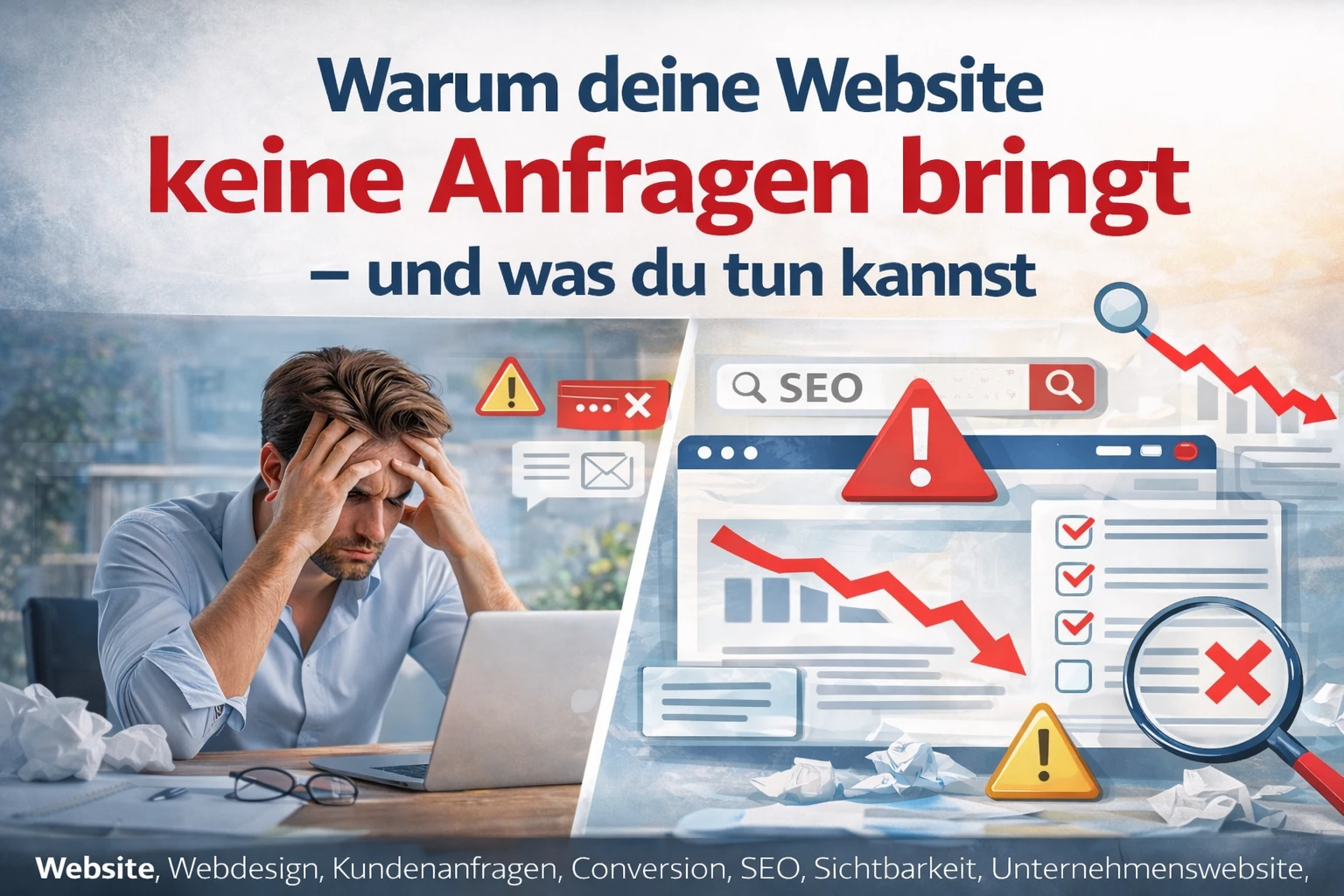
The website is live, the content is there, everything seems „okay“ – and yet, very little is happening. No predictable enquiries, no clear momentum, no real impact on your business.
The problem is rarely down to the design alone.
It's down to the construction.
Because a website that works doesn't follow a random structure.
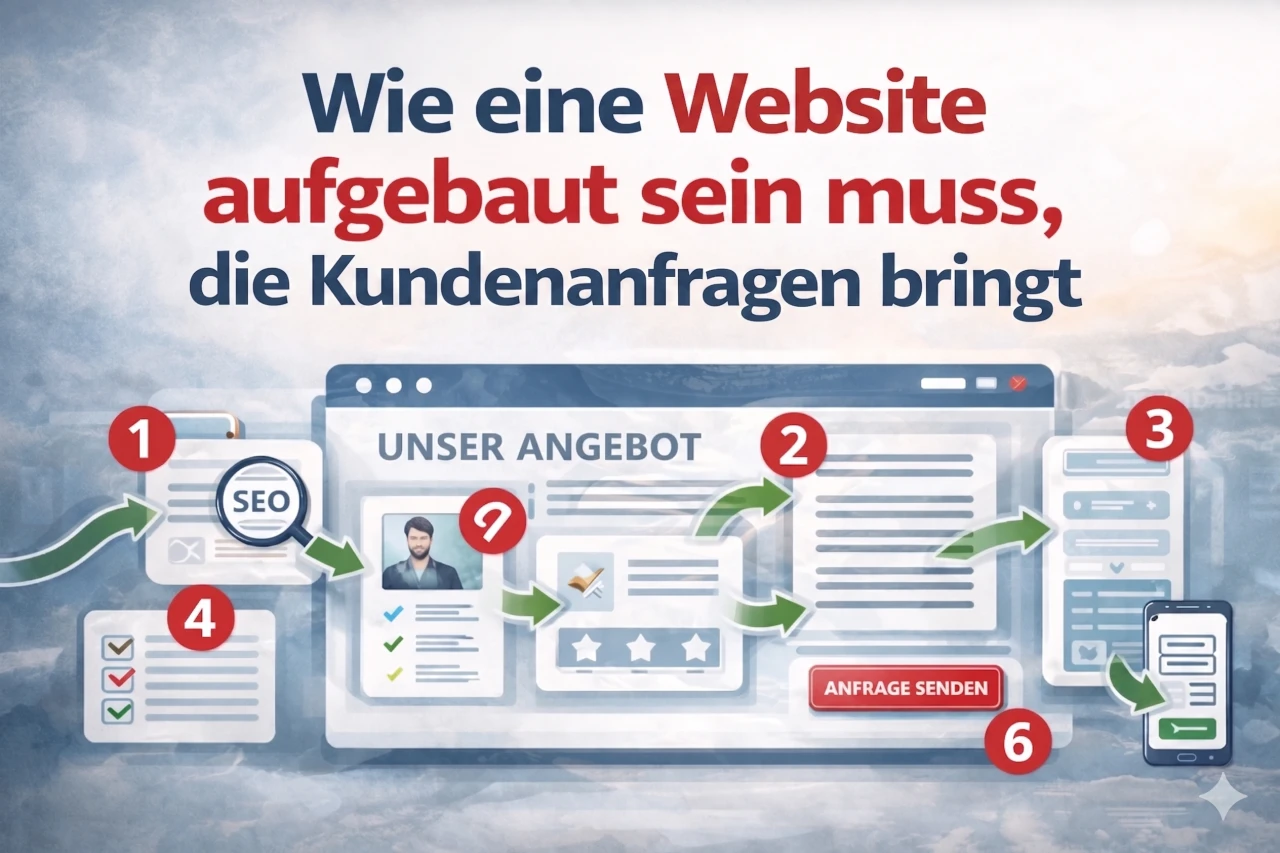
It follows a clear logic: Visibility → Trust → Action.
1. Clear introduction: What do you offer – and for whom?
When visitors come to your website, they decide in a few seconds:
Am I in the right place – or not?
If this question isn't answered immediately, they'll have already mentally checked out.
A strong website shows immediately:
- What you offer
- Who is your offer intended for
- what specific benefit it brings
No long explanations. No detours.
But clarity.
2. Trust is built in seconds – or not at all
Before anyone enquires, they need a good feeling.
This feeling arises not from individual elements, but from the interplay of:
- Imagery
- Language
- Structure
- Overall effect
To act in a supportive manner
- real customer testimonials
- Clear statements instead of platitudes
- A calm, professional design
This is precisely where it becomes apparent whether a website merely „exists“ – or truly builds trust.
3. User guidance instead of information overload
Many websites make a crucial mistake:
You show everything – but don't lead.
The result:
- Visitors click aimlessly
- Content is being skimmed
- Decisions are being postponed
A good website thinks in steps:
👉 Start
Understanding
Trust
Plot
This means:
- clear sections
- Logical structure
- less distraction
- Targeted guidance
Less is often more here.
4. Visibility through SEO from the start
A website can be perfectly designed –
If it's not found, it's no use.
That's why SEO isn't an „add-on“ at the end, but part of the development from the very beginning:
- Clear heading structure
- relevant keywords
- well-thought-out site structure
- Content with real relevance
Locally, this is a huge lever.
Often, targeted optimisations are enough to become significantly more visible.
5. Clear Calls to Action
Many websites lose enquiries because they don't clearly state what the next step is.
Typical problems:
- Too many options
- unclear buttons
- hidden contact options
A good website makes it easy:
What should the visitor do?
How does he get there?
For example:
- Book an appointment
- Make an inquiry
- Start website check
The clearer the next step, the higher the probability that it will also happen.
6. Technology that simply works
Technology is not a selling point –
but a decisive factor.
When a website:
- Slow loading
- The car is not working well.
- appears restless
- or forms don't run cleanly
then trust immediately erodes.
A good website is:
- Quick
- mobile-optimised
- stable
- easy to use
And that’s exactly what makes visitors stay – and not leave.
7. A website that works for you
The biggest difference lies here:
A simple website shows content
A good website actively works for your business
This means:
- She structures requests
- she pre-filters suitable customers
- It saves you time in everyday life
- she brings in new contacts predictably
This is precisely where the real added value is created.
Conclusion: Structure trumps design
A website doesn't need a spectacular design.
She needs a clear structure.
If this structure is correct:
- Will you be found better
- build trust faster
- get more requests
And that's precisely what it's about:
Not just to be online – but to be effective online.
Your next step
Are you unsure if your website is structured that way?
Then let's look at it together.
and find out where your website is currently missing out on potential.